Trending

An island can serve you four seasons before lunch. You step off the ferry into bright sunshine, walk twenty minutes along an exposed headland, and the wind arrives from nowhere with a sideways shower behind it. By the time you reach the harbour wall the sun is out again and you are carrying a wet jacket you did not want to put on.
Packing for that is less about expensive kit than about layers, spares and a day bag that works whether you are on deck, on a cliff path or sitting in a ferry terminal wondering whether the next sailing will go. Here is what to take, season by season.
Coastlines do their own thing. Sea breezes build through the morning as the land warms, so a sheltered garden at nine can be a windy headland by noon. Fetch matters too: the distance wind travels over open water means a west-facing point can feel two or three times breezier than a valley ten minutes inland. A forecast for "the island" is often really a forecast for one spot on it.
Shops add to the problem. Many island villages keep shorter hours, close on Sundays, or simply do not stock waterproof trousers in your size. Pack as though the nearest outdoor shop is a ferry ride away, because quite often it is.
Whatever month you sail, these earn their place in the bag:
Air temperatures rise faster than sea temperatures in spring, so coastal islands often feel cooler than the mainland forecast suggests. Expect mornings of soft grey drizzle that clear by early afternoon, then a sharp breeze the moment you leave a walled garden.
Take your full layering system, waterproof trousers, and an extra pair of socks for each day of walking. On the west coast of Scotland and parts of Ireland, midges arrive as the season warms; a cheap head net weighs nothing and saves an evening. If you take regular medication, carry a couple of extra days' worth in your hand luggage in case a sailing is moved, and speak to your pharmacist about anything you are unsure of.
High summer is the easiest season to pack for and the easiest to get wrong. You will want swimming things, a quick-drying towel, sandals for shingle and rock, a wide-brimmed hat and plenty of sun cream. You will also want a light windproof layer, because the sea breeze arrives most afternoons like clockwork.
Evenings cool down quickly once the sun drops, so add a jumper and long trousers for outdoor dinners. Reapply sun cream after swimming rather than once in the morning, and check with a pharmacist if you have sensitive skin or are travelling with children.
Autumn brings the best light and the worst rain, sometimes on the same afternoon. Pack a proper waterproof jacket rather than a shower-proof one, waterproof trousers, gaiters if you plan to cross boggy ground, and a spare set of dry clothes kept in a dry bag. Sailings can be disrupted by gales, so build a little slack into your plans and keep essentials with you rather than in the hold.
Winter is about warmth and visibility. Thermal base layers, a decent insulated jacket, waterproof boots with grip, gloves, a hat and a small head torch, because afternoons end early. Add a flask and something to sit on for the ferry deck, and accept that you may spend an hour in a terminal café watching the weather.
The big bag goes in the hold or in the car. The day bag stays with you, and it should be packed as if you might be sitting on a cold deck for three hours.
Hold on to your hat on the open deck. Seriously — the wind on a crossing can take it before you have finished the thought.
Lay out your clothes as complete sets rather than loose items, then pack one set in the day bag. Charge the power bank, fill the water bottle, and check your ferry operator's website or app for sailing updates before you leave. Leave a little empty space in the bag for wet kit and anything you pick up on the island. Do that, and a forecast that changes every few hours stops being a problem and starts being part of the trip.
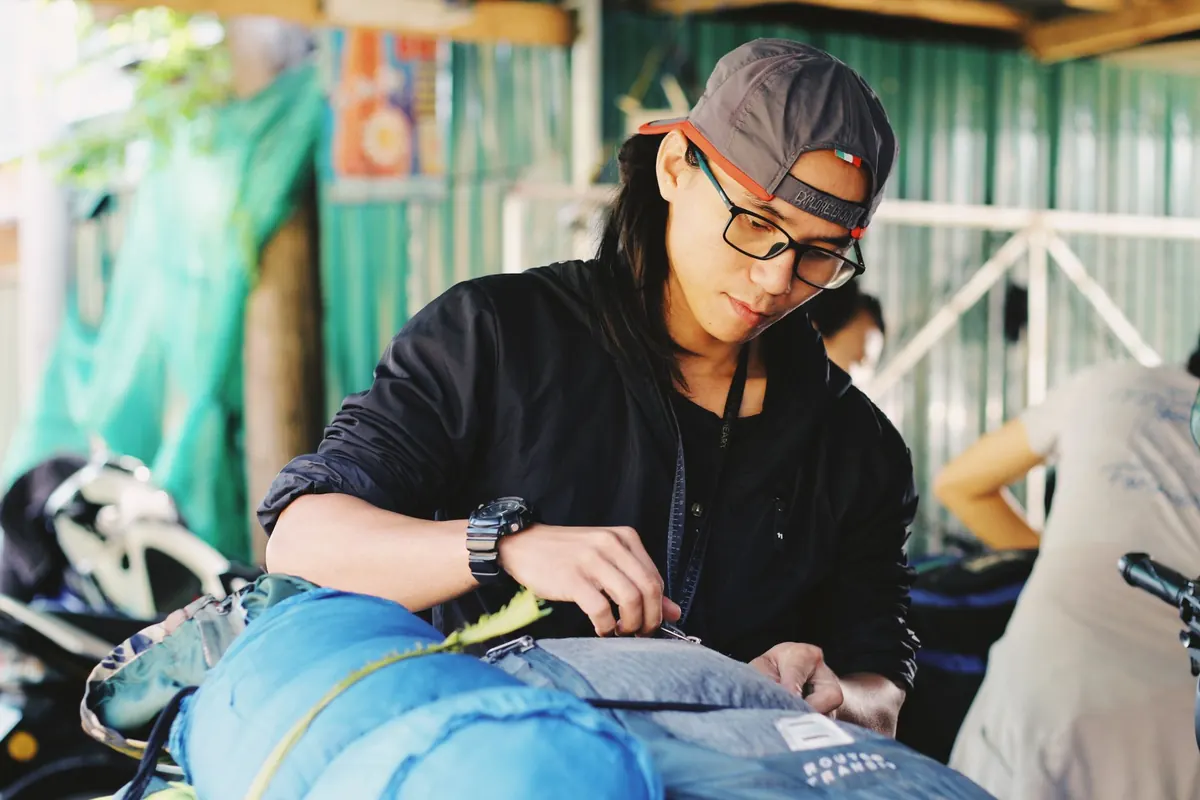
Photo: Bich Tran / Pexels